Kawhi Leonard’s Never-Ending Clippers Ego Saga: When Does a Superstar Become More Trouble Than He’s Worth?
By Frank Ammirante | Bookmakers Review (BMR)
There are superstar eras, and then there are hostage negotiations with sneakers.
The Kawhi Leonard-Clippers experiment was supposed to transform Los Angeles basketball. Not Lakers basketball. Clippers basketball. Steve Ballmer had the money, the new arena was coming, Kawhi was the reigning Finals MVP, and Paul George arrived as his hand-picked running mate.
Seven years later, the Clippers still don’t have an NBA Finals appearance to show for it, Leonard is owed $50.3 million in 2026-27, and an agreed trade sending him back to Toronto has been caught in limbo while the NBA finishes investigating alleged salary-cap circumvention involving Leonard’s endorsement arrangements. The Clippers have denied wrongdoing, and the matter remains unresolved; ESPN recently reported the league had found no evidence that Ballmer funneled money to Leonard, while the NBA immediately called that report materially inaccurate.
Just another quiet Kawhi offseason.
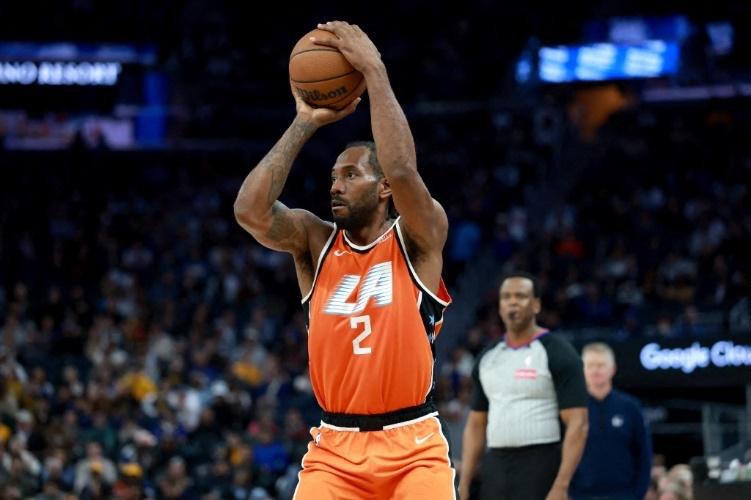
Image Caption and Credit: SAN FRANCISCO, CALIFORNIA - MARCH 02: Kawhi Leonard #2 of the Los Angeles Clippers shoots the ball against the Golden State Warriors at Chase Center on March 02, 2026 in San Francisco, California.
The Quietest Ego in Basketball
Leonard’s ego has never looked like the usual superstar variety.
There are no 14-minute Instagram monologues. No cryptic tweets. No weekly podcast explaining why everybody else failed him.
Kawhi barely talks.
His ego is more gravitational.
Everything simply bends around him.
When Leonard chose the Clippers in 2019, he wanted another star. Los Angeles responded by unloading Shai Gilgeous-Alexander, Danilo Gallinari, five first-round picks and two swaps to acquire Paul George. Leonard had recruited George personally, and his arrival helped seal Kawhi’s decision.
At the time, it looked bold.
Today, it looks like one of those old photographs where everyone is smiling right before the bridge collapses.
The real punchline is Gilgeous-Alexander. The kid shipped out to build Kawhi’s superteam became the league MVP, Finals MVP and centerpiece of an Oklahoma City championship team.
That isn’t hindsight gently tapping the Clippers on the shoulder. The long-term impact is also the kind of NBA
storyline that draws discussion across established sports communities
such as TheRX, particularly as fans assess how roster and front-office changes may affect future expectations.
That’s hindsight arriving in a monster truck.
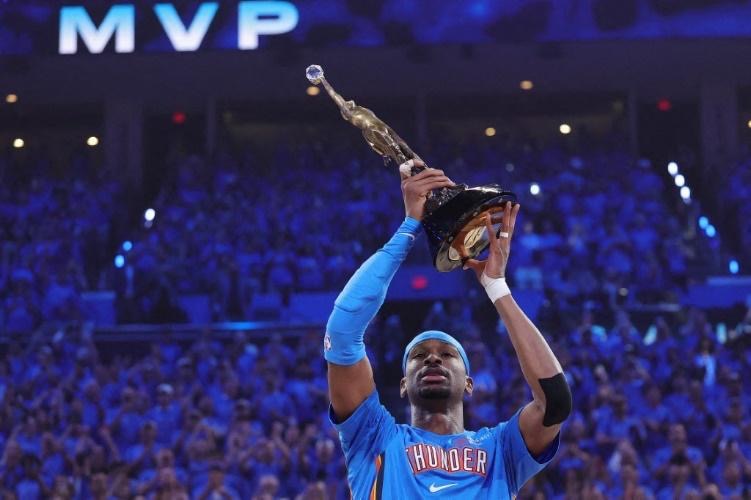
Image Caption and Credit: OKLAHOMA CITY, OKLAHOMA - MAY 18: Shai Gilgeous-Alexander #2 of the Oklahoma City Thunder is presented with the Michael Jordan Trophy after being named the NBA's most valuable player before Game One of the NBA Western Conference Finals against the San Antonio Spurs at Paycom Center on May 18, 2026 in Oklahoma City, Oklahoma.
And Here’s the Maddening Part: Kawhi Is Still Great
This would be easier if Leonard couldn’t play anymore.
Unfortunately for the prosecution, the man remains ridiculous when healthy.
Last season, at age 34, Leonard played 65 games and averaged 27.9 points, 6.4 rebounds and 3.6 assists, shooting 50.5% from the field and 38.7% from three. He remained one of basketball’s most efficient two-way stars worth 3-4 points according to the best sports betting sites.
That’s what keeps everybody trapped.
You watch Kawhi for three healthy weeks and think, “Of course you build around this guy.”
Then April arrives carrying a folding chair.
The Clippers’ Leonard era has produced spectacular individual basketball, constant medical suspense and precisely zero Finals appearances. Leonard’s playoff record while appearing for Los Angeles is 17-18.
At some point, availability stops being bad luck and becomes part of the asset evaluation.
Nobody buys a Ferrari by saying, “When the engine starts, buddy, you should see this thing.”
Image Caption and Credit: SAN ANTONIO, TEXAS - JUNE 13: Jalen Brunson #11 of the New York Knicks drives to the basket against Victor Wembanyama #1 of the San Antonio Spurs during the fourth quarter in Game Five of the 2026 NBA Finals at Frost Bank Center on June 13, 2026 in San Antonio, Texas.
Meanwhile, Other Stars Are Building Something
Now look around the league.
Jalen Brunson will make roughly $37.7 million this season—more than $12 million less than Leonard—and famously signed an extension that guaranteed him about $113 million less than he could have pursued by waiting. The purpose was straightforward: give New York more flexibility to build around him.
Knicks fans didn’t merely adopt Brunson.
They practically issued him subway keys.
He plays. He leads. He takes hits. He talks about teammates. He looks emotionally invested in whether New York wins Tuesday night in February.
Then there’s Victor Wembanyama.
San Antonio’s 22-year-old extraterrestrial will make about $16.9 million this season, roughly one-third of Leonard’s salary. Yes, that’s primarily because of rookie-scale economics, and his giant extension kicks in afterward. But watch the relationship between Wembanyama and Spurs fans. There is energy there. Optimism. Community. A sense that everybody is building the same thing together.
That stuff matters.
Basketball franchises aren’t spreadsheets with mascots.
Fans invest emotionally. Teammates invest physically. Cities want stars who feel like their guys.
Kawhi has always felt different.
Not selfish, necessarily.
Remote.
The Clippers spent years constructing a palace around a king who sometimes seemed like he was renting the throne.
How Much Accommodation Is Too Much?
This is where “ego” becomes less about personality and more about organizational power.
Superstars deserve accommodations. Nikola Jokic gets them. Giannis gets them. Steph Curry could probably demand that Golden State replace every locker with a hammock tomorrow afternoon.
But accommodations come with an implied bargain:
You bend the organization because I will carry the organization.
With Kawhi, the Clippers bent.
They traded the future.
They paired him with George.
They managed his workload.
They reshaped rosters.
They waited through injuries.
They kept believing there was one healthy postseason hiding around the corner that would make everything look brilliant.
It never arrived.
And now, as if the whole saga needed one more melodramatic subplot, Leonard’s proposed return to Toronto—where he delivered the greatest season in Raptors history—is hanging over an unresolved NBA investigation. Then Garrett Chorpenning, reporting for OddsTrader.com, reported Toronto and Los Angeles agreed to a deal involving Brandon Ingram, Gradey Dick and a substantial package of draft assets before the transaction was placed on hold.
You couldn’t write a cleaner ending if Netflix handed you six episodes.
The Superstar Equation Has Changed
The NBA spent years teaching organizations one lesson:
Get the superstar and figure everything else out later.
Kawhi Leonard may represent the limits of that philosophy.
Talent matters.
But so do availability, salary, flexibility, leadership, continuity and whether a franchise feels like a team instead of an elaborate life-support system built around one player.
Brunson gives New York something.
Wembanyama gives San Antonio something.
Oklahoma City’s young stars give the Thunder something.
It isn’t merely production.
It is momentum.
Fans feel like they are riding somewhere together.
The Clippers have spent seven years asking whether Kawhi will be available when they arrive.
Leonard is a Hall of Famer. Two championships. Two Finals MVPs. Two Defensive Player of the Year awards. One of the greatest two-way players of his generation.
None of that is debatable.
But neither is the question anymore.
At what point does having a superstar become less valuable than having a team?
For the Clippers, the answer may have arrived several years—and about one dynasty’s worth of draft capital—too late.
| 