WNBA Logo History
 1997-2013
Original WNBA logo
1997-2013
Original WNBA logo
|
 2013-2019
WNBA silhouette logo
2013-2019
WNBA silhouette logo
|
 2019-Present
Modern WNBA identity
2019-Present
Modern WNBA identity
|
The Beginning of the WNBA
The Women's National Basketball Association, commonly known as the WNBA,
is the leading women's professional basketball league in the United States
and one of the most important women's sports leagues in the world. Approved
in 1996 and launched in 1997, the WNBA created a permanent professional
stage for many of the greatest players in women's basketball history.
The league began with eight teams and a summer schedule designed to avoid
direct competition with the NBA season. From those beginnings, the WNBA
developed into a league with a growing national audience, international
talent, historic franchises and an increasingly important position in
American sports culture.
WNBA history includes championship dynasties, expansion and relocation,
labor progress, international stars, social advocacy and enormous changes
in the visibility of women's basketball.
The Growth of Women's Basketball
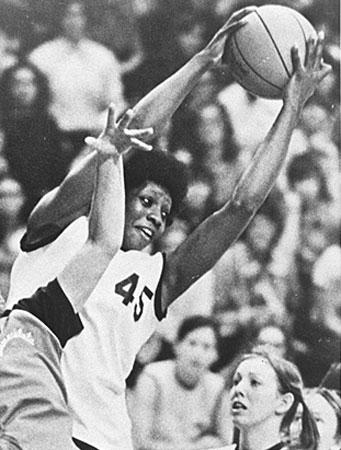
The WNBA did not emerge in isolation. Women's basketball had already been
played for more than a century when the league was created. Women's college
basketball expanded dramatically during the 1970s and 1980s, particularly
after Title IX increased athletic opportunities for women in American
schools and universities.
The Association for Intercollegiate Athletics for Women organized national
championships before the NCAA began sponsoring women's basketball in 1982.
Programs such as Louisiana Tech, Tennessee, Connecticut, Southern
California, Old Dominion and Stanford helped build the popularity of the
women's college game.
Professional women's leagues had also existed before the WNBA. The Women's
Professional Basketball League operated from 1978 through 1981, while
American players frequently went overseas to continue their professional
careers.
The 1996 United States Olympic Team
One of the most important events leading to the WNBA was the success of
the 1996 United States women's Olympic basketball team. The national team
trained and toured together before the Atlanta Olympics and included stars
such as Lisa Leslie, Sheryl Swoopes, Rebecca Lobo, Dawn Staley, Teresa
Edwards, Katrina McClain and Ruthie Bolton.
The United States completed an undefeated Olympic run and won the gold
medal. The team's popularity demonstrated the potential audience for elite
women's basketball while giving the future WNBA many of its first
recognizable stars.
The WNBA Is Approved
On April 24, 1996, the NBA Board of Governors approved the creation of the
Women's National Basketball Association. The new league was backed by the
NBA, giving it access to established arenas, business relationships,
television partners and marketing resources.
Val Ackerman was named the first president of the WNBA. The league adopted
the promotional slogan "We Got Next", which became closely
identified with its early years.
The Eight Original WNBA Teams
- Charlotte Sting
- Cleveland Rockers
- Houston Comets
- Los Angeles Sparks
- New York Liberty
- Phoenix Mercury
- Sacramento Monarchs
- Utah Starzz
The original teams were placed in cities that already had NBA organizations.
Several of the franchises eventually relocated or ceased operations, while
the Los Angeles Sparks, New York Liberty and Phoenix Mercury remained
important parts of the league decades later.
The First WNBA Season
The First WNBA Players
Rebecca Lobo and Sheryl Swoopes became the first players to sign with the
new league in October 1996. Lisa Leslie and Ruthie Bolton soon followed.
The WNBA used an initial player allocation process to place prominent stars
with franchises and also conducted an Elite Draft and its first regular
college draft before the inaugural season.
The First WNBA Game
The first WNBA game was played on June 21, 1997, when the Los Angeles
Sparks hosted the New York Liberty at the Great Western Forum in Inglewood,
California. Penny Toler scored the first basket in league history, while
New York defeated Los Angeles 67-57.
The inaugural season consisted of 28 regular-season games for each team.
By August 1997, total league attendance had surpassed one million.
Dynasties and Championship Eras
The Houston Comets Dynasty
The Houston Comets became the first great dynasty in WNBA history. Led by
Cynthia Cooper, Sheryl Swoopes and Tina Thompson, Houston won the league's
first four championships from 1997 through 2000.
Cooper became the WNBA's first dominant postseason star and was named
Finals MVP in all four championship seasons. Head coach Van Chancellor
built Houston around experience, defense, perimeter scoring and strong
team chemistry.
Cynthia Cooper
Cynthia Cooper became the defining player of the WNBA's first era.
Already 34 years old when the league began, she quickly established
herself as one of its premier scorers and late-game performers. Her
success also brought long-overdue American recognition to a player who
had spent much of her professional career overseas.
Sheryl Swoopes and Tina Thompson
Sheryl Swoopes became one of the WNBA's first nationally recognizable
stars and developed into an elite scorer and defender. Tina Thompson,
the first overall selection in the inaugural WNBA Draft, provided scoring,
rebounding and versatility.
Together with Cooper, Swoopes and Thompson formed one of the greatest trios
in women's professional basketball history.
The Los Angeles Sparks Rise
After Houston's championship run ended, the Los Angeles Sparks became the
league's next dominant team. Led by Lisa Leslie, Los Angeles won
championships in 2001 and 2002 under head coach Michael Cooper.
Leslie won Finals MVP in both championship seasons and in 2002 became the
first player to dunk during a WNBA game.
The Detroit Shock
The Detroit Shock became one of the league's strongest teams of the 2000s.
Under head coach Bill Laimbeer, Detroit developed a physical and
defensively aggressive identity. The Shock won championships in 2003,
2006 and 2008.
The Sacramento Monarchs
The Sacramento Monarchs were one of the original WNBA franchises and built
a loyal following in Northern California. Led by Yolanda Griffith, Ticha
Penicheiro and a deep supporting cast, Sacramento won the 2005 WNBA
championship.
The Phoenix Mercury
The Phoenix Mercury became one of the WNBA's most successful franchises.
Led by Diana Taurasi, Cappie Pondexter and Penny Taylor, Phoenix won
championships in 2007 and 2009. The Mercury added another championship in
2014 behind Taurasi, Brittney Griner and DeWanna Bonner.
Diana Taurasi
Diana Taurasi became one of the defining players in WNBA history. Selected
first overall by Phoenix in 2004, Taurasi developed into the league's
career scoring leader and one of its most accomplished postseason
performers.
The Seattle Storm
Seattle won its first championship in 2004 behind Lauren Jackson, Sue Bird
and Finals MVP Betty Lennox. The Storm won again in 2010 and then began
another championship era with Breanna Stewart and Jewell Loyd, winning
titles in 2018 and 2020.
Sue Bird
Sue Bird spent her entire WNBA career with Seattle after being selected
first overall in 2002. She won four championships and became the league's
career assists leader, connecting multiple generations of Storm basketball.
Indiana and Tamika Catchings
The Indiana Fever became a consistent contender behind Tamika Catchings,
one of the greatest two-way players in league history. Indiana reached the
Finals in 2009 and won the championship in 2012, when Catchings was named
Finals MVP.
The Minnesota Lynx Dynasty
The Minnesota Lynx became the dominant WNBA franchise of the 2010s. Led by
Maya Moore, Seimone Augustus, Lindsay Whalen, Rebekkah Brunson and Sylvia
Fowles, Minnesota won championships in 2011, 2013, 2015 and 2017.
The Lynx reached six Finals in seven seasons from 2011 through 2017 and
joined Houston and Seattle as four-time champions.
Maya Moore
Maya Moore immediately helped Minnesota win a championship as a rookie in
2011. She developed into one of the league's greatest winners before
stepping away from basketball while still near the height of her career.
The Sparks Return to the Top
Los Angeles returned to championship prominence in 2016 behind Candace
Parker, Nneka Ogwumike, Kristi Toliver and Chelsea Gray. The Sparks defeated
Minnesota in a five-game Finals series, with Parker earning Finals MVP.
Expansion, Relocation and Contraction
The WNBA expanded quickly in its first several seasons. Detroit and
Washington joined in 1998. Minnesota and Orlando followed in 1999, and
Indiana, Miami, Portland and Seattle entered in 2000. The league grew from
eight teams in 1997 to 16 in 2000.
That rapid expansion also created financial challenges. Miami and Portland
ceased operations after 2002, Cleveland after 2003 and Charlotte after
2006.
Several franchises relocated. The Orlando Miracle moved to Connecticut and
became the Sun. The Utah Starzz moved to San Antonio and ultimately became
the Las Vegas Aces. The Detroit Shock moved to Tulsa and later to the
Dallas area, where the franchise became the Wings.
The Modern WNBA
The 2020 Collective Bargaining Agreement
The WNBA and WNBPA reached a landmark collective bargaining agreement
before the 2020 season. The agreement improved compensation, travel
standards, maternity and family-planning benefits, career development and
other working conditions.
The 2020 Bubble Season
The COVID-19 pandemic forced the WNBA to stage its 2020 season in
Bradenton, Florida, in a controlled environment that became known as the
"Wubble." Seattle defeated Las Vegas in the Finals to capture its fourth
championship.
The Commissioner's Cup
The WNBA introduced the Commissioner's Cup in 2021 as an in-season
competition. Designated regular-season games counted toward Cup standings,
giving teams an additional championship to pursue during the season.
The Chicago Sky Win in 2021
Chicago won the first championship in franchise history in 2021. Led by
Candace Parker, Courtney Vandersloot, Allie Quigley and Kahleah Copper,
the Sky defeated Phoenix in four games in the Finals. Copper was named
Finals MVP.
The Las Vegas Aces
The Las Vegas Aces became one of the league's premier organizations after
the franchise relocated from San Antonio. Led by A'ja Wilson, Chelsea Gray,
Kelsey Plum and Jackie Young, Las Vegas won championships in 2022 and 2023.
The Aces returned to the top in 2025, giving the franchise three
championships in four seasons.
A'ja Wilson
A'ja Wilson became the defining player of the Aces era. Selected first
overall in 2018, Wilson developed into an elite scorer, rebounder and
defender while collecting MVP, Defensive Player of the Year, championship
and Finals MVP honors.
The New York Liberty Win Their First Championship
The New York Liberty were one of the league's original franchises and
appeared in the inaugural championship game in 1997. After decades of
near misses, New York defeated the Minnesota Lynx in the 2024 Finals to
win the first championship in franchise history.
Jonquel Jones was named Finals MVP for a Liberty team that also featured
Breanna Stewart and Sabrina Ionescu.
Growing Popularity
The WNBA experienced major growth in attendance, television audiences,
merchandise sales and digital engagement during the 2020s. Established
stars such as A'ja Wilson, Breanna Stewart, Sabrina Ionescu and Napheesa
Collier were joined by a highly publicized generation of younger players.
Caitlin Clark, Angel Reese, Cameron Brink, Rickea Jackson, Paige Bueckers
and other recent college stars brought additional attention to the league.
Teams increasingly moved selected games into larger arenas to meet demand.
Caitlin Clark and a New Audience
Caitlin Clark entered the WNBA in 2024 after becoming the NCAA Division I
career scoring leader at Iowa. Indiana selected her first overall. Her
shooting range, passing and enormous college following accelerated
attendance, television and merchandise interest around a league that was
already growing rapidly.
Golden State, Toronto and Portland
The Golden State Valkyries began play in 2025, becoming the league's first
expansion franchise since Atlanta joined in 2008.
Toronto and Portland joined the league for the 2026 season. Toronto became
the first WNBA franchise based outside the United States, while Portland
returned to the league after previously hosting a franchise from 2000
through 2002.
Additional expansion franchises have been approved for Cleveland, Detroit
and Philadelphia, continuing the largest expansion period in WNBA history.
WNBA Franchise Timeline
| Year |
League Development |
| 1996 | NBA Board of Governors approves creation of the WNBA |
| 1997 | WNBA begins play with eight teams |
| 1998 | Detroit Shock and Washington Mystics join |
| 1999 | Minnesota Lynx and Orlando Miracle join |
| 2000 | Indiana Fever, Miami Sol, Portland Fire and Seattle Storm join |
| 2003 | Orlando Miracle relocate and become the Connecticut Sun |
| 2003 | Utah Starzz relocate to San Antonio |
| 2006 | Chicago Sky begin play |
| 2008 | Atlanta Dream begin play |
| 2010 | Detroit Shock franchise begins play in Tulsa |
| 2016 | Tulsa Shock relocate and become Dallas Wings |
| 2018 | San Antonio franchise relocates and becomes Las Vegas Aces |
| 2025 | Golden State Valkyries begin play |
| 2026 | Toronto and Portland begin play |
| 2028 | Cleveland expansion franchise scheduled to begin play |
| 2029 | Detroit expansion franchise scheduled to begin play |
| 2030 | Philadelphia expansion franchise scheduled to begin play |
WNBA Champions
For complete Finals opponents, series results and Finals MVPs, visit the
complete WNBA Champions page.
| Season | Champion |
|---|
| 1997 | Houston Comets |
| 1998 | Houston Comets |
| 1999 | Houston Comets |
| 2000 | Houston Comets |
| 2001 | Los Angeles Sparks |
| 2002 | Los Angeles Sparks |
| 2003 | Detroit Shock |
| 2004 | Seattle Storm |
| 2005 | Sacramento Monarchs |
| 2006 | Detroit Shock |
| 2007 | Phoenix Mercury |
| 2008 | Detroit Shock |
| 2009 | Phoenix Mercury |
| 2010 | Seattle Storm |
| 2011 | Minnesota Lynx |
|
| Season | Champion |
|---|
| 2012 | Indiana Fever |
| 2013 | Minnesota Lynx |
| 2014 | Phoenix Mercury |
| 2015 | Minnesota Lynx |
| 2016 | Los Angeles Sparks |
| 2017 | Minnesota Lynx |
| 2018 | Seattle Storm |
| 2019 | Washington Mystics |
| 2020 | Seattle Storm |
| 2021 | Chicago Sky |
| 2022 | Las Vegas Aces |
| 2023 | Las Vegas Aces |
| 2024 | New York Liberty |
| 2025 | Las Vegas Aces |
|
Most WNBA Championships Through 2025:
Houston Comets — 4
Minnesota Lynx — 4
Seattle Storm — 4
Los Angeles Sparks — 3
Phoenix Mercury — 3
Detroit Shock — 3
Las Vegas Aces — 3
Notable Players in WNBA History
- Cynthia Cooper
- Sheryl Swoopes
- Tina Thompson
- Lisa Leslie
- Rebecca Lobo
- Teresa Weatherspoon
- Yolanda Griffith
- Lauren Jackson
- Sue Bird
- Diana Taurasi
- Tamika Catchings
- Candace Parker
- Maya Moore
- Seimone Augustus
- Sylvia Fowles
- Becky Hammon
- Brittney Griner
- Elena Delle Donne
- Breanna Stewart
- A'ja Wilson
- Napheesa Collier
- Jonquel Jones
- Sabrina Ionescu
- Caitlin Clark
International Influence
The WNBA has always featured international talent. Players from Australia,
Canada, Brazil, France, Spain, Belgium, China, Russia, the Bahamas and many
other nations have competed in the league. International stars such as
Lauren Jackson, Ticha Penicheiro, Janeth Arcain, Emma Meesseman and
Jonquel Jones played major roles in WNBA history.
The Importance of College Basketball
Women's college basketball remains closely connected to the WNBA. The NCAA
Tournament introduces fans to future professional stars before they enter
the league. Connecticut, Tennessee, South Carolina, Stanford, Notre Dame,
Baylor, Louisiana Tech and Southern California are among the programs that
have produced generations of WNBA players.
WNBA Presidents and Commissioners
| Leader |
Position |
Tenure |
| Val Ackerman |
President |
1996-2005 |
| Donna Orender |
President |
2005-2010 |
| Chris Granger |
Interim President |
2011 |
| Laurel J. Richie |
President |
2011-2015 |
| Lisa Borders |
President |
2015-2018 |
| Mark Tatum |
Interim Leadership |
2018-2019 |
|
Cathy Engelbert
|
Commissioner |
2019-2026 |
The Legacy of the WNBA
The WNBA survived challenges that caused earlier women's professional
basketball leagues to disappear. Its connection to the NBA provided an
important foundation, but the league's longevity ultimately depended on
its players, fans, owners, coaches, sponsors and communities.
The league created a visible professional destination for generations of
basketball players while also providing opportunities for women as coaches,
executives, broadcasters, officials and sports business leaders.
Its history includes some of the greatest athletes in basketball, from
Cynthia Cooper and Lisa Leslie to Diana Taurasi, Maya Moore, Breanna Stewart
and A'ja Wilson. Its teams produced memorable dynasties in Houston, Los
Angeles, Detroit, Minnesota, Seattle and Las Vegas.
What began with eight teams and a game between the New York Liberty and
Los Angeles Sparks in June 1997 developed into a lasting professional
league with an international talent base, a growing audience and a major
place in basketball history.
WNBA and Women's Basketball Articles