
History of the Women's National Basketball Association
The Women's National Basketball Association, commonly known as the WNBA, is the leading women's professional basketball league in the United States and one of the most important women's sports leagues in the world. Approved in 1996 and launched in 1997, the WNBA created a permanent professional stage for many of the greatest players in women's basketball history.
The league began with eight teams and a summer schedule designed to avoid direct competition with the NBA season. From those modest beginnings, the WNBA developed into a league with a growing national audience, global talent, historic franchises and an increasingly important place in American sports culture.
The history of the WNBA includes dominant dynasties, franchise expansion and relocation, labor progress, international stars, social advocacy and major changes in the public visibility of women's basketball. By its 30th season in 2026, the league had expanded to 15 active teams, with additional franchises approved for Cleveland, Detroit and Philadelphia.
The Growth of Women's Basketball
The WNBA did not emerge in isolation. Women's basketball had been played for more than a century before the league was founded.
Women's college basketball grew significantly during the 1970s and 1980s, especially after the passage of Title IX in 1972 expanded athletic opportunities for women in American schools and universities.
The Association for Intercollegiate Athletics for Women organized national championships before the NCAA began sponsoring women's basketball in 1982. Programs such as Louisiana Tech, Tennessee, Connecticut, Southern California, Old Dominion and Stanford helped make the women's college game increasingly popular.
Professional women's leagues also existed before the WNBA. The Women's Professional Basketball League operated from 1978 through 1981, while the Women's Basketball Association and other smaller leagues attempted to establish professional opportunities.
Many leading American players also competed overseas, where women's professional basketball was better established in parts of Europe, Asia and South America.
The 1996 United States Olympic Team
One of the most important developments leading to the WNBA was the success of the 1996 United States women's Olympic basketball team.
The national team spent months training and touring together before the Atlanta Olympics. Its roster included stars such as Lisa Leslie, Sheryl Swoopes, Rebecca Lobo, Dawn Staley, Teresa Edwards, Katrina McClain and Ruthie Bolton.
The United States completed an undefeated Olympic run and won the gold medal. The team's success demonstrated the quality and popularity of elite women's basketball at a moment when American sports executives were considering a new professional league.
The Olympics provided many of the future WNBA's first recognizable stars and helped build momentum for the league's launch.
The WNBA Is Approved
On April 24, 1996, the NBA Board of Governors approved the creation of the Women's National Basketball Association.
The new league was backed by the NBA, giving it access to established arenas, business relationships, television partners and marketing resources.
Val Ackerman was named the first president of the WNBA. She played a major role in organizing the league, recruiting players, building partnerships and preparing the eight charter franchises for competition.
The league adopted the promotional slogan “We Got Next”, which became closely connected to the WNBA's early identity.
The Eight Original WNBA Teams
The WNBA announced eight charter franchises for its inaugural season:
- Charlotte Sting
- Cleveland Rockers
- Houston Comets
- Los Angeles Sparks
- New York Liberty
- Phoenix Mercury
- Sacramento Monarchs
- Utah Starzz
The original teams were placed in cities that already had NBA organizations. This connection allowed the WNBA clubs to share arenas, administrative support and local marketing infrastructure.
Several of those franchises later relocated or folded, but the Los Angeles Sparks, New York Liberty and Phoenix Mercury remained active into the league's 30th season.
The First WNBA Players
Rebecca Lobo and Sheryl Swoopes became the first players to sign with the new league in October 1996. Lisa Leslie and Ruthie Bolton soon followed.
The WNBA used an initial player allocation process to place prominent stars with teams. It also conducted an elite draft and its first regular college draft before the 1997 season.
The early player pool included established Olympians, college stars and experienced international professionals.
The First WNBA Game
The inaugural WNBA game was played on June 21, 1997, when the Los Angeles Sparks hosted the New York Liberty at the Great Western Forum in Inglewood, California.
A crowd of 14,284 attended the historic opener.
Los Angeles guard Penny Toler scored the first basket in WNBA history. The Liberty went on to defeat the Sparks 67-57.
The league's opening season consisted of 28 regular-season games for each team. By August 1997, total league attendance had surpassed one million.
The Houston Comets Dynasty
The Houston Comets became the first great dynasty in WNBA history.
Led by Cynthia Cooper, Sheryl Swoopes and Tina Thompson, Houston won the league's first four championships from 1997 through 2000.
Cooper became the WNBA's first dominant postseason star. She won the league's first two Most Valuable Player awards and was named Finals MVP in each of Houston's four championship seasons.
Head coach Van Chancellor built the Comets around experience, defense, perimeter scoring and strong team chemistry.
Houston defeated the New York Liberty in the first WNBA championship game in 1997. The Comets then defeated Phoenix in 1998 and New York again in 1999 and 2000.
The four consecutive championships remain one of the greatest dynastic achievements in women's professional sports.
Cynthia Cooper
Cynthia Cooper became the defining player of the WNBA's first era.
Cooper was already 34 years old when the league began, but she quickly established herself as its premier scorer and late-game performer.
Her ability to create shots, draw fouls and control important possessions made her the centerpiece of Houston's dynasty.
Cooper's success also demonstrated how the WNBA could provide overdue recognition to players who had spent much of their careers competing overseas.
Sheryl Swoopes and Tina Thompson
Sheryl Swoopes became one of the league's first nationally recognized stars. She developed into an elite scorer and defender and later won multiple WNBA Most Valuable Player and Defensive Player of the Year awards.
Tina Thompson, the first overall selection in the inaugural WNBA Draft, provided scoring, rebounding and versatility. She remained in the league for 17 seasons and became one of the most productive players in WNBA history.
Together with Cooper, Swoopes and Thompson formed one of the strongest trios professional basketball has seen.
Early Expansion
The WNBA expanded quickly during its early years.
The Detroit Shock and Washington Mystics joined in 1998. The Minnesota Lynx and Orlando Miracle entered in 1999, followed by the Indiana Fever, Miami Sol, Portland Fire and Seattle Storm in 2000.
By the 2000 season, the league had grown from eight teams to 16.
The rapid expansion increased the WNBA's geographic reach but also created financial challenges. Not every market developed sufficient attendance, ownership stability or sponsorship support.
The Women's National Basketball Players Association
WNBA players organized the Women's National Basketball Players Association, or WNBPA, during the league's first era.
The union became responsible for negotiating collective bargaining agreements, protecting player rights, filing grievances and addressing salaries, benefits, travel, working conditions and career support.
The WNBPA became the first labor union for professional women athletes in the United States to negotiate a collective bargaining agreement.
Labor negotiations remained an important part of the league's development as players sought greater compensation and improved professional standards.
The Los Angeles Sparks Rise
After Houston's four-year championship run, the Los Angeles Sparks became the league's next dominant team.
The Sparks were led by Lisa Leslie, one of the most important players in women's basketball history. Leslie combined scoring, rebounding, defense and athleticism while becoming one of the WNBA's most visible stars.
Los Angeles won championships in 2001 and 2002 under head coach Michael Cooper.
Leslie won Finals MVP in both championship seasons. She also became the first player to dunk in a WNBA game in 2002.
Lisa Leslie
Lisa Leslie was one of the foundational stars of the WNBA.
A member of the inaugural Los Angeles roster, she became a multiple-time league MVP, Defensive Player of the Year, All-Star and Olympic champion.
Her combination of size, skill and marketability helped the league reach a wider audience.
Leslie's first in-game dunk became one of the most memorable milestones in WNBA history and symbolized the continued evolution of the women's game.
Franchise Contraction and Relocation
The WNBA experienced a period of contraction during the early 2000s.
The Miami Sol and Portland Fire folded after the 2002 season. The Cleveland Rockers ceased operations after 2003, and the Charlotte Sting folded after the 2006 season.
Several franchises relocated. The Orlando Miracle moved to Connecticut and became the Connecticut Sun in 2003. The Utah Starzz moved to San Antonio and became the Silver Stars.
The Detroit Shock later relocated to Tulsa and eventually to the Dallas area, where the franchise became the Dallas Wings. The San Antonio franchise moved to Las Vegas and became the Aces.
These changes reflected the business challenges of sustaining professional teams, but relocation also created opportunities for franchises to build stronger support in new markets.
The Detroit Shock
The Detroit Shock became one of the WNBA's most successful teams of the 2000s.
Under head coach Bill Laimbeer, Detroit developed a physical, deep and defensively aggressive identity.
The Shock won championships in 2003, 2006 and 2008. Their leading players included Swin Cash, Cheryl Ford, Deanna Nolan, Ruth Riley and Katie Smith.
Detroit's three titles established the franchise as one of the league's great dynasties before its relocation to Tulsa.
The Sacramento Monarchs
The Sacramento Monarchs were one of the original WNBA franchises and developed a loyal fan base in Northern California.
Led by Yolanda Griffith, Ticha Penicheiro, DeMya Walker and Nicole Powell, Sacramento won the 2005 WNBA championship.
The Monarchs were known for defense, depth and disciplined team play.
Despite their success and popularity, the franchise ceased operations after the 2009 season.
The Phoenix Mercury
The Phoenix Mercury became one of the league's most successful and recognizable franchises.
Led by Diana Taurasi, Cappie Pondexter and Penny Taylor, Phoenix won championships in 2007 and 2009.
The Mercury played an aggressive, high-scoring style built around pace, perimeter shooting and offensive freedom.
Phoenix won another championship in 2014 behind Taurasi, Brittney Griner and DeWanna Bonner.
Diana Taurasi
Diana Taurasi became one of the greatest players in WNBA history.
Selected first overall by Phoenix in 2004, Taurasi developed into the league's career scoring leader and one of its most accomplished postseason performers.
Her career included championships, MVP honors, scoring titles, All-Star selections and Olympic gold medals.
Taurasi's shooting range, passing ability and competitiveness made her one of the defining players of the league's second decade.
The Seattle Storm
The Seattle Storm built one of the WNBA's strongest long-term organizations.
Seattle won its first championship in 2004 behind Lauren Jackson, Sue Bird and Finals MVP Betty Lennox.
The Storm added another championship in 2010 with Bird and Jackson still leading the team.
A new era began with Breanna Stewart and Jewell Loyd. Seattle won championships in 2018 and 2020, giving the franchise four titles.
The Storm became known for organizational stability, strong fan support and sustained success across multiple generations.
Sue Bird
Sue Bird became one of the most respected point guards in basketball history.
Selected first overall by Seattle in 2002, Bird spent her entire WNBA career with the Storm.
She won four championships and became the league's career leader in assists. Her vision, leadership and longevity connected several different eras of Seattle basketball.
The Indiana Fever and Tamika Catchings
The Indiana Fever became a consistent playoff team behind Tamika Catchings.
Catchings was one of the best two-way players in league history. She combined scoring and rebounding with elite defense, leadership and effort.
Indiana reached the WNBA Finals in 2009 and won the championship in 2012. Catchings was named Finals MVP.
Her career also included a league MVP award, multiple Defensive Player of the Year honors and numerous All-Star selections.
The Minnesota Lynx Dynasty
The Minnesota Lynx became the dominant WNBA franchise of the 2010s.
Led by Maya Moore, Seimone Augustus, Lindsay Whalen, Rebekkah Brunson and Sylvia Fowles, Minnesota won championships in 2011, 2013, 2015 and 2017.
Head coach Cheryl Reeve built a team known for unselfish offense, veteran leadership, rebounding and defense.
The Lynx reached six Finals in seven seasons from 2011 through 2017.
Their four championships tied the Houston Comets and Seattle Storm for the most in league history at the time.
Maya Moore
Maya Moore became one of the league's greatest winners.
The first overall selection in the 2011 draft, Moore immediately helped Minnesota win a championship during her rookie season.
She combined elite scoring, athleticism, defense and versatility while earning MVP and Finals MVP honors.
Moore stepped away from basketball while still near the height of her career to pursue criminal justice reform and other advocacy work.
The Los Angeles Sparks Return to the Top
The Sparks returned to championship prominence in 2016.
Led by Candace Parker, Nneka Ogwumike, Kristi Toliver and Chelsea Gray, Los Angeles defeated the Minnesota Lynx in a five-game Finals series.
Parker was named Finals MVP. The championship was the third in Sparks history and their first since 2002.
The 2020 Collective Bargaining Agreement
The WNBA and WNBPA reached a landmark collective bargaining agreement before the 2020 season.
The agreement improved player compensation, travel standards, maternity and family-planning benefits, career development opportunities and other working conditions.
It represented a major step in the professionalization of the league and reflected the increasing influence of the players' union.
The 2020 Bubble Season
The COVID-19 pandemic forced the WNBA to play its 2020 season at a single location in Bradenton, Florida.
The league created a controlled environment that became known as the “Wubble.” Teams played a shortened regular season without normal home crowds or travel.
The players used the season to draw attention to racial justice, voting rights and the Say Her Name campaign.
Seattle completed an outstanding season by defeating the Las Vegas Aces in the Finals and winning its fourth championship.
Social Justice and Player Activism
WNBA players became some of the most prominent athlete activists in American sports.
Players spoke publicly about racial justice, police violence, voting rights, LGBTQ+ equality, women's rights and workplace equity.
Teams and players used shirts, media appearances, game presentations and organized campaigns to support social causes.
The league's willingness to engage with social issues became a defining part of its modern identity.
The Commissioner's Cup
The WNBA introduced the Commissioner's Cup as an in-season competition in 2021.
Selected regular-season games counted toward separate Cup standings, and the leading teams advanced to a championship game with prize money and charitable components.
The competition created additional meaning within the regular-season schedule and gave teams another trophy to pursue.
The Chicago Sky Win in 2021
The Chicago Sky won the franchise's first WNBA championship in 2021.
Led by Candace Parker, Courtney Vandersloot, Allie Quigley and Kahleah Copper, Chicago entered the playoffs as a lower seed but defeated Dallas, Minnesota and Connecticut before facing Phoenix in the Finals.
The Sky defeated the Mercury in four games. Copper was named Finals MVP.
The Las Vegas Aces
The Las Vegas Aces developed into one of the league's premier organizations after relocating from San Antonio.
Led by A'ja Wilson, Chelsea Gray, Kelsey Plum and Jackie Young, the Aces won their first championship in 2022 under head coach Becky Hammon.
Las Vegas repeated in 2023 by defeating the New York Liberty, becoming the first WNBA team to win consecutive championships since the Los Angeles Sparks in 2001 and 2002.
The Aces won another championship in 2025, giving the franchise three titles in four seasons.
A'ja Wilson
A'ja Wilson became the defining player of the Aces' championship era.
Selected first overall in 2018, Wilson developed into an elite scorer, rebounder and defender.
Her career included multiple league MVP awards, Defensive Player of the Year honors, championships and Finals MVP recognition.
Wilson's success made her one of the leading faces of the WNBA during a period of rapid audience growth.
The New York Liberty Win Their First Championship
The New York Liberty were one of the WNBA's original eight franchises and appeared in the inaugural championship game in 1997.
Despite reaching the Finals several times, New York did not win a title during the league's first 27 seasons.
The franchise assembled a powerful roster featuring Breanna Stewart, Sabrina Ionescu and Jonquel Jones.
In 2024, the Liberty defeated the Minnesota Lynx in a five-game Finals series to win the first championship in franchise history. Jones was named Finals MVP.
Breanna Stewart
Breanna Stewart became one of the league's most accomplished modern players.
After winning championships and MVP honors with Seattle, Stewart signed with New York and helped transform the Liberty into a title contender.
Her scoring, rebounding, defense and versatility made her one of the most complete players in the league.
Growing Popularity
The WNBA experienced major growth in attendance, television audiences, merchandise sales and digital engagement during the 2020s.
Established stars such as A'ja Wilson, Breanna Stewart, Sabrina Ionescu and Napheesa Collier were joined by a highly publicized generation of young players.
Caitlin Clark, Angel Reese, Cameron Brink, Rickea Jackson, Paige Bueckers and other recent college stars brought new attention to the league.
Teams moved selected games into larger arenas to accommodate demand, and national broadcasts drew increasingly large audiences.
Caitlin Clark and a New Audience
Caitlin Clark entered the WNBA in 2024 after becoming the NCAA Division I career scoring leader at Iowa.
The Indiana Fever selected her with the first overall pick.
Her long-range shooting, passing and enormous college following helped produce significant increases in attendance, television ratings and merchandise interest.
Clark's arrival did not create the WNBA's growth by itself, but it accelerated attention around a league that had already been developing stronger stars, audiences and commercial partnerships.
The Golden State Valkyries
The Golden State Valkyries became the WNBA's first expansion team since the Atlanta Dream joined in 2008.
The Valkyries began play in 2025 at Chase Center in San Francisco.
Their arrival marked the beginning of a major expansion period and gave the league another presence in Northern California after the Sacramento Monarchs folded.
Expansion to Toronto and Portland
The Toronto Tempo and Portland Fire joined the league for the 2026 season.
Toronto became the first WNBA franchise based outside the United States and brought the league into one of North America's largest basketball markets.
Portland returned to the WNBA after previously hosting an earlier Fire franchise from 2000 through 2002.
With Golden State, Toronto and Portland, the WNBA reached 15 active teams for its 30th season.
Future Expansion
The WNBA approved three additional expansion markets as part of its long-term growth strategy.
Cleveland is scheduled to begin play in 2028, Detroit in 2029 and Philadelphia in 2030.
Cleveland and Detroit previously hosted WNBA teams, while Philadelphia will receive its first franchise.
Once all three teams begin play, the WNBA is expected to have 18 franchises.
WNBA Franchise Timeline
| Year |
League Development |
| 1996 |
NBA Board of Governors approves creation of the WNBA |
| 1997 |
WNBA begins play with eight teams |
| 1998 |
Detroit Shock and Washington Mystics join |
| 1999 |
Minnesota Lynx and Orlando Miracle join |
| 2000 |
Indiana Fever, Miami Sol, Portland Fire and Seattle Storm join |
| 2003 |
Orlando Miracle relocate and become Connecticut Sun |
| 2003 |
Utah Starzz relocate to San Antonio |
| 2006 |
Chicago Sky begin play |
| 2008 |
Atlanta Dream begin play |
| 2010 |
Detroit Shock franchise begins play in Tulsa |
| 2016 |
Tulsa Shock relocate and become Dallas Wings |
| 2018 |
San Antonio Stars relocate and become Las Vegas Aces |
| 2025 |
Golden State Valkyries begin play |
| 2026 |
Toronto Tempo and Portland Fire begin play |
| 2028 |
Cleveland expansion team scheduled to begin play |
| 2029 |
Detroit expansion team scheduled to begin play |
| 2030 |
Philadelphia expansion team scheduled to begin play |
WNBA Champions
| Season |
Champion |
| 1997 | Houston Comets |
| 1998 | Houston Comets |
| 1999 | Houston Comets |
| 2000 | Houston Comets |
| 2001 | Los Angeles Sparks |
| 2002 | Los Angeles Sparks |
| 2003 | Detroit Shock |
| 2004 | Seattle Storm |
| 2005 | Sacramento Monarchs |
| 2006 | Detroit Shock |
| 2007 | Phoenix Mercury |
| 2008 | Detroit Shock |
| 2009 | Phoenix Mercury |
| 2010 | Seattle Storm |
| 2011 | Minnesota Lynx |
| 2012 | Indiana Fever |
| 2013 | Minnesota Lynx |
| 2014 | Phoenix Mercury |
| 2015 | Minnesota Lynx |
| 2016 | Los Angeles Sparks |
| 2017 | Minnesota Lynx |
| 2018 | Seattle Storm |
| 2019 | Washington Mystics |
| 2020 | Seattle Storm |
| 2021 | Chicago Sky |
| 2022 | Las Vegas Aces |
| 2023 | Las Vegas Aces |
| 2024 | New York Liberty |
| 2025 | Las Vegas Aces |
Franchises With the Most Championships Through 2025
| Franchise |
Championships |
| Houston Comets |
4 |
| Minnesota Lynx |
4 |
| Seattle Storm |
4 |
| Los Angeles Sparks |
3 |
| Phoenix Mercury |
3 |
| Detroit Shock |
3 |
| Las Vegas Aces |
3 |
Notable WNBA Players
- Cynthia Cooper
- Sheryl Swoopes
- Tina Thompson
- Lisa Leslie
- Rebecca Lobo
- Teresa Weatherspoon
- Yolanda Griffith
- Lauren Jackson
- Sue Bird
- Diana Taurasi
- Tamika Catchings
- Candace Parker
- Maya Moore
- Seimone Augustus
- Sylvia Fowles
- Becky Hammon
- Brittney Griner
- Elena Delle Donne
- Breanna Stewart
- A'ja Wilson
- Napheesa Collier
- Jonquel Jones
- Sabrina Ionescu
- Caitlin Clark
International Influence
The WNBA has always been an international league.
Players from Australia, Canada, Brazil, France, Spain, Belgium, China, Russia, the Bahamas and many other countries have competed in the league.
International stars such as Lauren Jackson, Ticha Penicheiro, Janeth Arcain, Emma Meesseman, Jonquel Jones and several others played major roles on championship teams.
Many WNBA players also competed overseas during the league's offseason, supplementing their income and expanding their professional careers.
The addition of the Toronto Tempo in 2026 strengthened the league's international reach by establishing its first franchise outside the United States.
The Importance of College Basketball
Women's college basketball remains closely connected to the WNBA.
The NCAA tournament introduces fans to future professionals and helps establish player followings before they enter the league.
Programs such as Connecticut, Tennessee, South Carolina, Stanford, Notre Dame, Baylor, Louisiana Tech and Southern California have produced numerous WNBA stars.
The popularity of the college game has increasingly carried over into WNBA attendance, television ratings and merchandise sales.
The Legacy of the WNBA
The WNBA survived challenges that caused earlier women's professional basketball leagues to disappear.
Its connection to the NBA provided an important foundation, but the league's longevity ultimately depended on its players, fans, owners, coaches, sponsors and communities.
The WNBA created a visible professional destination for generations of young basketball players. It also provided opportunities for women as coaches, executives, broadcasters, officials and sports business leaders.
The league's history includes some of the greatest athletes in basketball, from Cynthia Cooper and Lisa Leslie to Diana Taurasi, Maya Moore, Breanna Stewart and A'ja Wilson.
Its teams produced memorable dynasties in Houston, Los Angeles, Detroit, Minnesota, Seattle and Las Vegas. Other franchises created breakthrough moments, including Sacramento's 2005 title, Indiana's 2012 championship, Chicago's 2021 run and New York's long-awaited victory in 2024.
The WNBA also became an influential platform for social advocacy and workplace progress. Its players consistently used their voices to address issues extending far beyond basketball.
By its 30th season, the league was entering its largest expansion period in decades. Golden State, Toronto and Portland expanded the active membership to 15 teams, while Cleveland, Detroit and Philadelphia were preparing to bring the total to 18.
What began with eight teams and one game between the New York Liberty and Los Angeles Sparks in June 1997 developed into a lasting professional league with an international talent base, a growing audience and an increasingly important position in global sports.
The history of the WNBA is not simply the story of a women's league surviving. It is the story of a league building traditions, creating stars, influencing culture and reshaping expectations for women's professional sports.
WNBA Presidents / Commissioners
President         Tenure
Val Ackerman      1996–2005
Donna Orender     2005–2010
Chris Granger     2011
Laurel J. Richie  2011–2015
Lisa Borders      2015–2018
Mark Tatum        2018–2019
Commissioner      Tenure
Cathy Engelbert   2019–present
Royce White and Enes Freedom's WNBA Stunt Is More Ridiculous Than Revolutionary
Former NBA players Royce White and Enes Kanter Freedom have found a new way to put themselves back into the basketball conversation: announcing plans to enter the 2027 WNBA Draft.
Neither announcement should be confused with the ordinary situation of a transgender athlete seeking to participate in sports consistent with her gender identity. White and Freedom are making a political and rhetorical point about transgender eligibility rules in women's sports. Their announcements are deliberately designed to test where the WNBA draws the line.
That distinction matters, because otherwise an obvious publicity stunt gets turned into a caricature of transgender athletes themselves.
Still, as basketball theater, the whole thing is difficult to take seriously.
Complete Article |
|
Marie Boyd: The First 100 Point Scorer:
Great scorer's and basketball seem to go hand-in-hand, so it is a rarity that a great scorer goes unnoticed, especially one that scores an astonishing 156 points in a game. But Marie Boyd, whose name is often misattributed as Mary Boyd, is just that; a prolific scorer that nobody knows of. She was the first player, man or woman, to score 100 points in a basketball game, a feat that has largely gone unnoticed.
Boyd is arguably the greatest woman basketball player of the first 50 years of basketball. An era where both the men's and women's game lacked the competition that we see today. Nonetheless she still dominated at such a high degree that was unmatched in the men's game until Wilt Chamberlain come along.
Central High School in Lonaconing, Maryland, was one of the first dominant schools in basketball history. The Black Knights as they were called went 4 years, 1922-25, without a loss and were in large part lead by the dominating Boyd
Complete Article |
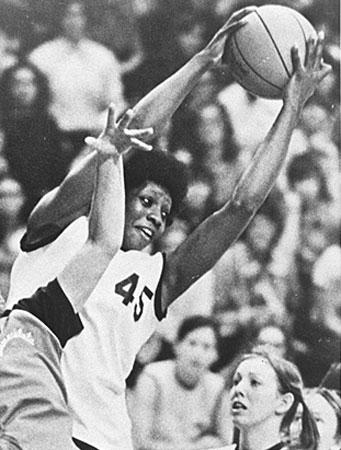 |
Many people do not realize that long before there was the WNBA, there was a woman who attempted to join the ranks of professional basketball. six-foot-three Lusia Harris of Delta State University was taken in the seventh round of the 1977 NBA draft by the New Orleans Jazz. The pick was well deserving. Harris is still one of the greatest center to ever play women's college basketball.
She was a three-time All American at Delta State,Four-time All-State, All-Region, team MVP and team high scorer. She set a then record of 58 points in a game.
Complete Article |
| 

