 |
|
Player info Draft Picks Players | Team info 1948 Championship Brief History Playoffs Season records | Stats |
Quick facts:

Founded:  1944
Folded:   1954
Arena:    Baltimore Coliseum
Built in: 1939
Capacity: 6,100
Colors:   Orange, Blue
Titles:   2 1944 ABL; 1948-BAA
Playoffs: 3

1944-46 ABL Baltimore Bullets
1946-49 BAA Baltimore Bullets
1949-54 NBA Baltimore Bullets

Coachs:

Buddy Jeannette    1947-50
Walt Budko         1949-50
Fred Scolari       1950-51
Chuck Reiser       1951-52
Clai Bee           1952-53
Fun Facts:
Injury Bug?
On February 10, 1952 the Bullets used only 5 players in a game against Fort Wayne. The Bullets had 8 players available but a lot of them where injured so head coach Chick Reiser stuck with his starting line up for all 48 minutes.
This is just one of two incidents in NBA history were a team has played only 5 players. The other one occurred a year earlier when the Olympians used only 5 players in a game following their epic 6 overtime game vs Syracuse.

Comeback:
In game 2 of the 1948 BAA finals the Bullets came back from 21 points down at half time. The comeback was the largest comeback in NBA playoffs history until the Cavs came back from 25 down in 2017.
Three Championships in 3 Seasons - Kind of:
The Bullets won the 1945 ABL title by beating the SPHA's in a tiebreaker game, than the Gothams and finally the SPHA's again in the championship series. This title is not disputed by the ABL. However, the next year the Bullets went 31-3 and easily dispatched the Gothams again. But the Trenton Tigers had delays in their series and further delays setting up the championship series.
Tired of waiting, the Bullets claimed the title based on their 31-3 record and went and played in the World Basketball Tournament. The league disagreed and ignored the Bullets protests. Annoyed by their treatment by the league, the Bullets applied for and were granted admission to the Basketball Association of America.
As members of the BAA the Bullets once again dominated in the post-season. The Bullets won the tie breaker vs the Stags, than went on to defeat the Knicks, Stags again, and finally the defending champion Warriors.
Excluding the forced forfeit vs the Tigers, the Bullets won an impressive 8 playoff series in a row. That streak would come to an end however in 1949 at the hands of the New York Knicks. The loss to the Knicks would be the end to the Bullets pseduo-dynasty as the team failed to make the playoffs again until 1953. The 1949 1-2 loss to the Knicks was also the last time the Bullets would win a post-season game. In 1953 the Knicks swept the Bullets 0-2 and by the middle of the 1955 season the Bullets disbanded.


 Don Barksdale |  Walt Budko |  Paul Hoffman |  Red Klotz |
 Jim Slaughter |  Al Scolari |  Buddy Jeanette |  Jeannette |
 Connie Simmons |


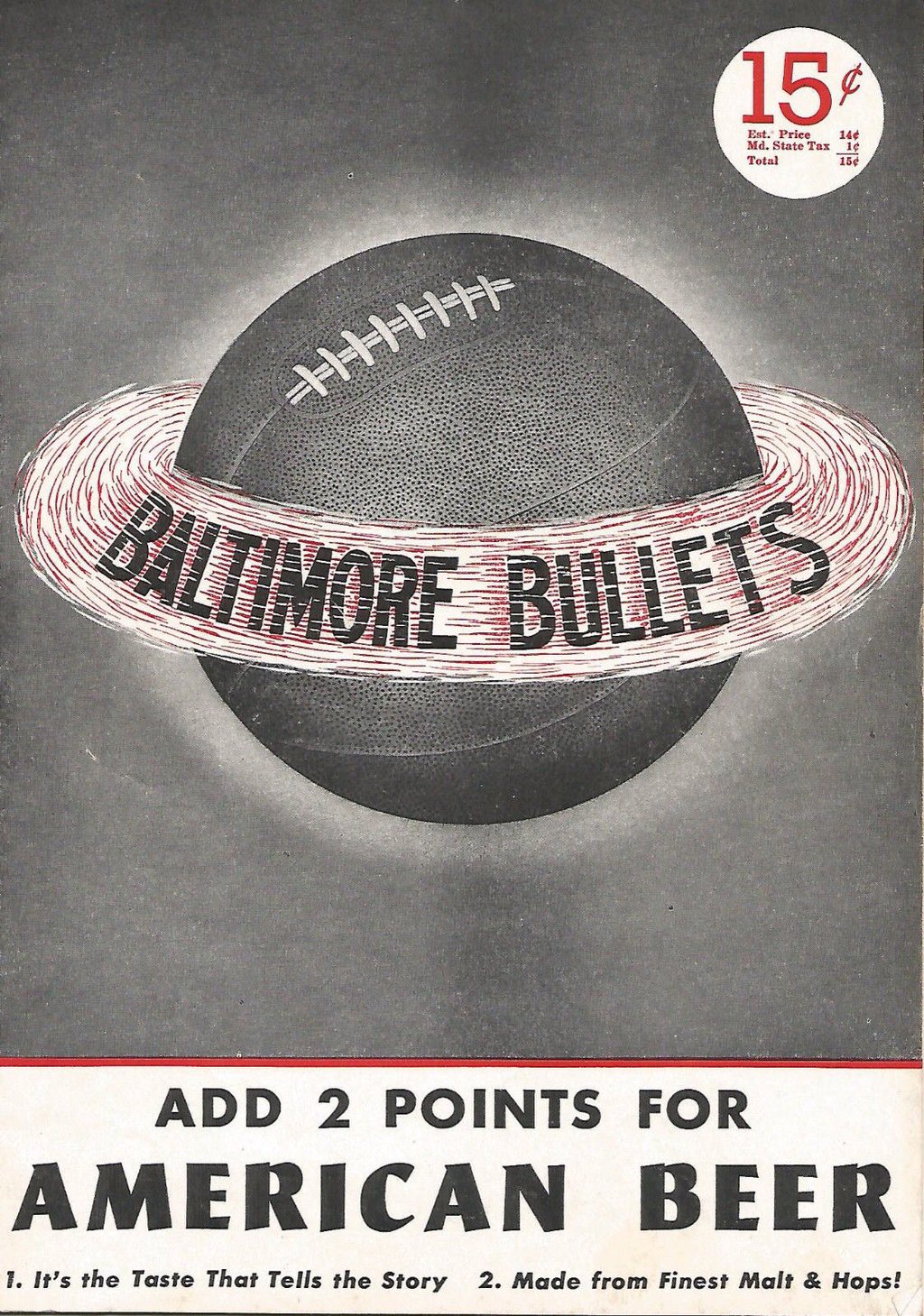
Two game programs from games at Madison Square Garden.
|
The City of Negaunee, Michigan, is known as a mining town in the Upper Peninsula, that has turned into winter sports hub with one of the best luge tracks west of the Mississippi River. With a population of just 4,500 people, it seems to be an unlikely place to find an NBA game. But on January 16, 1952, that is exactly what happened. Negaunee, Michigan, became the smallest city to ever host a regular NBA season game.
Of the four major North American professional sports leagues the NBA has always had a reputation for having some of the smallest markets. Seven NBA markets do not have a corresponding NFL, MLB or NHL team. The BAA's merger with the NBL also added several cities like Waterloo, Iowa; Anderson, Indiana; Sheboygan, Wisconsin, and Moline, Illinois to the ranks of small towns home to an NBA team. But by 1952 the NBA had done away with much of the smaller markets in the league. In the 1951-52 season the NBA was struggling. The league had shrank for the 18 teams it had just 2 seasons prior to just 10 teams for that season. Several of the teams that entered the season were on shaky ground. The Western Division was rife with trouble, all 5 teams had serious financial issues and rumors were rampant about their possible relocation. This relocation talk is what spurred the NBA to look into new markets and other ways to attracted new fans.
|
| Tweet |